

Why Resistance Happens in Every Organization
Resistance to change isn’t a character flaw — it’s a deeply human response. Psychologists call this status quo bias, the natural tendency to prefer what feels familiar over what feels uncertain. Even when change brings potential benefits, people often perceive more risk than reward.

Classic change management models illustrate this dynamic:
- Kurt Lewin’s Change Model frames resistance as the force that keeps organizations “frozen” in old habits until they are unfrozen through awareness and motivation.
- Kotter’s 8-Step Process emphasizes creating urgency and empowering broad-based action, both aimed at lowering resistance.
- The ADKAR Model highlights the importance of individual awareness and desire before knowledge and ability can lead to adoption.
In practice, resistance arises from three universal triggers:
- Loss Aversion – People fear losing competence, status, or control.
- Uncertainty Avoidance – Humans are wired to minimize ambiguity, so unclear outcomes breed hesitation.
- Cognitive Overload – Competing priorities make it difficult to focus on new behaviors, even if people agree with the change.
Ignoring these forces doesn’t make them disappear. Instead, it amplifies silent disengagement — the type that stalls projects without anyone openly saying “no.”
Schedule your session today and connect with our AI Coach on Slack, Teams or through our webapp.

Remote Work
PartsWerx was in a tough spot with the combination of change to remote work and in-season demand from the customers. They felt that their employees needed support. They also felt the existence of some underlying structural issues and wanted to diagnose the root causes of those challenges.

Leadership Development
Mindvalley saw the potential of Pandatron’s scalable coaching solution and wanted to test it out with the future collaboration and integration with their own programs in mind.

Sales Excellence
SAP was struggling with the trust between the sales and presales departments. It trickled down to a lot of smaller challenges with processes and teamwork in general. COVID wasn’t helping the situation.
Quiet vs. Loud Resistance
Resistance to change isn’t a character flaw — it’s a deeply human response. Psychologists call this status quo bias, the natural tendency to prefer what feels familiar over what feels uncertain. Even when change brings potential benefits, people often perceive more risk than reward.
Quiet vs. Loud Resistance
Not all resistance looks the same.
- Loud Resistance: Employees openly challenge new initiatives in meetings or through formal channels.
- Quiet Resistance: Far more dangerous, this shows up as minimal effort, delayed adoption, or surface-level compliance while privately disagreeing.
Quiet resistance often comes from people who don’t feel safe enough to voice concerns. Without a system for listening, leaders may not realize their change program is in trouble until KPIs start slipping.
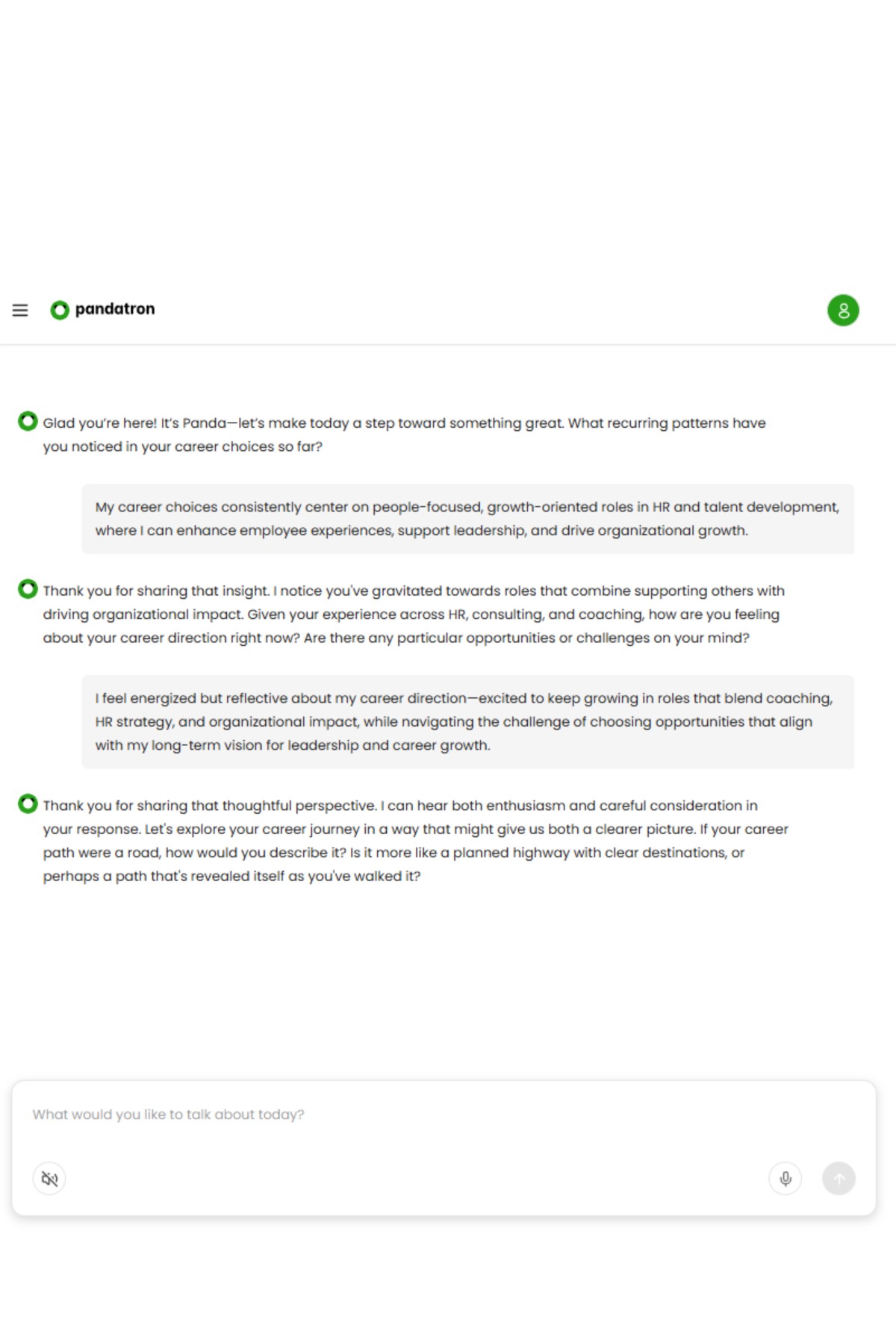
Pandatron’s systemic coaching shines here: by offering confidential, reflective conversations, it captures the whispers leaders rarely hear in formal settings.
Listening as a Leadership Superpower
Change leaders often underestimate the strategic power of listening. Research by Harvard Business Review shows that employees who feel heard are 4.6 times more likely to perform at their best.
Listening doesn’t mean agreeing with every concern. It means acknowledging emotions, clarifying misunderstandings, and showing employees how their input influences decisions.
AI systemic coaching amplifies listening at scale by:
- Collecting thousands of micro-insights across the organization.
- Spotting resistance patterns before they become blockers.
- Giving leaders actionable feedback without waiting for annual survey.







FAQs About Overcoming Resistance
Q: Does AI coaching replace human managers?
No. AI coaching augments human leadership by surfacing patterns managers can act on. It’s a tool for empowerment, not replacement.
Q: How is employee privacy protected?
Conversations are confidential and aggregated. Leaders see trends, not individual identities.
Q: What if employees don’t engage?
The conversational design of AI coaching is lightweight and flexible, making it easy for employees to participate without extra burden.
Looking Ahead: The Future of Change Management
By 2030, organizational change will be less about top-down directives and more about continuous, adaptive dialogue. AI systemic coaching tools like Pandatron’s will serve as always-on partners for both employees and leaders, ensuring resistance is addressed before it stalls progress.
The organizations that succeed won’t be those with the best strategies on paper, but those that create trust, transparency, and engagement at scale.
Why It Works
Resistance thrives in the shadows. Systemic coaching, especially when deployed with conversational AI, shines a light on what’s really going on. It creates trust, surfaces misalignment, and builds momentum through reflection and accountability. The result? Less friction, more ownership, and faster execution.
Bottom Line: You can’t outsource trust. You can’t mandate engagement, you can’t eliminate resistance to change. But you can create conditions where people move from resistant to ready. It starts with listening “at scale” and supporting behavior change in the flow of work.
Pandatron helps you listen at scale, build psychological safety, and turn silent hesitation into active support.
Book a 20-minute walkthrough of Pandatron’s AI Change Agent today and see how to move your teams from resistant to ready.
